A Heartfelt Thank-You

A Heartfelt Thank-You

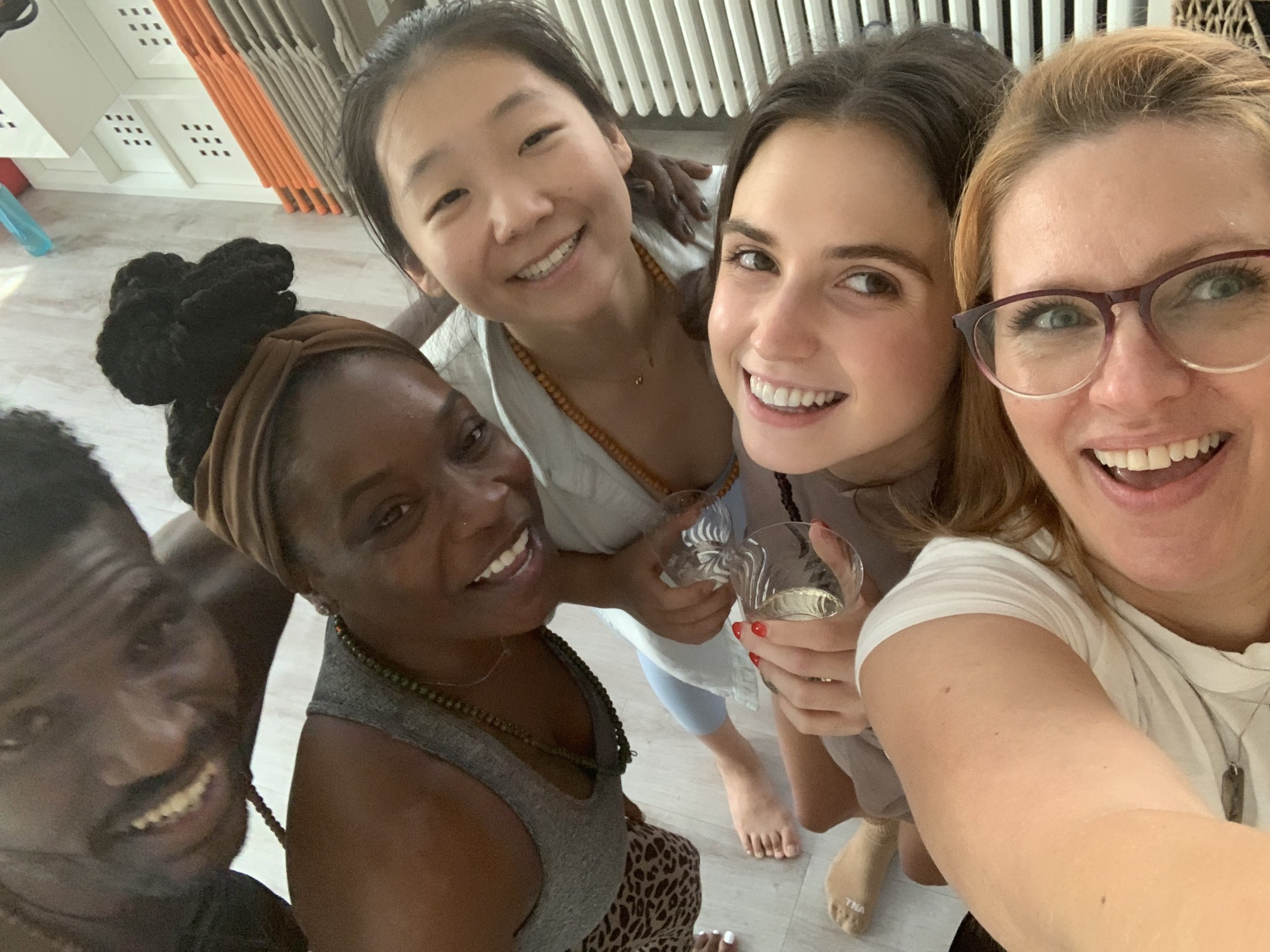
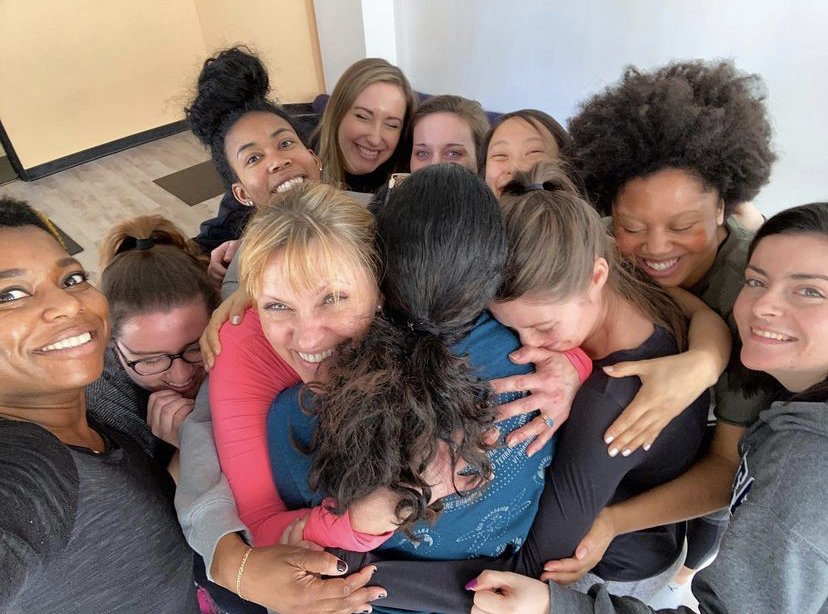
This is a letter of gratitude and admiration for every single member of the Three Sisters Yoga community. I feel so warmly embraced and so deeply valued whenever I arrive at our cozy studio. My evolving roles within this space over the past few years have given my life richness and meaning. As a student, an asana teacher, a YTT teacher, and the voice behind much of TSY’s social media and marketing content, this community has helped me grow into a version of myself I’m truly proud to be.

Read More

On "Success" in Yoga

On "Success" in Yoga

Meaningful impact as a teacher happens when you get people to congregate and communicate, when you connect with another person and share. You can be intentional, devoted, good at what you do and be relatively unknown, uncelebrated and still be successful. The people in your orbit are important enough to care about and extend yourself for. It doesn’t need to be more than that. 

Read More

On Body Politics

On Body Politics

Not one person in this community has ever made me feel “less than” for the size and shape of my body. In fact, I have always felt empowered to try new things to make myself more comfortable, like Jan’s suggestion to stand with my feet at hip’s width distance instead of touching in standing postures, which has been a godsend for balance as someone with hips as naturally wide-set as mine. Who knew one simple shift could create such a strong foundation, literally and metaphorically?

Read More

Joe Trees

When I was a very little kid, my parents would take us to the forest to hunt for our Christmas trees. We’d go sledding and my dad would build a fire so we could roast hot dogs. We’d drink hot cocoa from a thermos. It was all very classic, very perfect, very wonderfully Christmas. 

Those trips ended after my parents found themselves in a double bind of sickness and financial straits; they couldn’t go tree hunting and they couldn’t afford to buy a tree off a lot. 

Luckily, my dad’s friend, Joe, came to the rescue. He offered to cut a tree down for us. Joe was a kind, but gruff, practical outdoorsman man with no sense of style or aesthetic appreciation. And so, the tree he cut for us was hideous. It was the alpine equivalent of heavy drinker who’d been in a lot of bar brawls. It was the walk of shame of trees. This tree had a hard life and stories to tell. It was tall, but also squat, like a bridge troll with a shrunken head. It had weird, gnarly branches that stuck out in every direction like hooks, yet somehow it also managed to have large bald patches everywhere. When we tried the “ol’ turn the bad side to the wall’ trick, we discovered we couldn’t. Every side was a bad side. 

My sisters and I were devasted. This was the ugliest, meanest tree we had ever seen. How could this be our tree? We told our dad, “Forget this tree!” but he wouldn’t hear it. He knew it was a generous gesture, given out of love. Even if it was horrible, he was grateful and there was no way we weren’t going to keep it. We were stuck with this Joe Tree. 


My mom, sisters and I decided to make the best of it. We were going to Charlie Brown this tree! We’d love it into the tree we knew it could be! We bought fancy tinsel garlands and pretty bows. We made paper chains and added extra baubles.

It didn’t work. It just made a prickly, grumpy tree a shinier, prickly, grumpy tree.


The tree was embarrassing and we tried to keep our friends away. When they came over, we’d joke about the tree, ridicule it, make fun of it, our dad, and Joe. The tree had, in many ways, become a representation of the life we were living behind closed doors. It was a life that we still desperately wanted to be “perfect,” but was in fact being turned upside down. 


Joe continued to cut trees for us for several years. Every year the tree was a utilitarian nightmare. Every year we’d beg our parents to buy a tree, but they were struggling to make ends meet so it was Joe Tree, or no tree. And even a Joe Tree was better than no tree. So, every year we put lipstick on that pig and made the best of it. 


Over time Joe Trees became our inside joke. They became less and less about what others would think and more and more about what we knew to be true; Joe was a friend, and he was trying to be nice. And Christmas and families are messy and complicated. And those trees were horrible. 

________________

Of all my childhood holiday memories, the Joe Trees stand out because they are an endearing gesture of love that were ultimately harmless, and, in hindsight, very funny. 


Joe Trees are now the standard by which my younger sister and I gauge our holiday prowess. We almost instinctively look for the messy part of our holiday preparations and share them with gleeful pride. The lights we never finished hanging, the food we burn, the gifts we forgot to send, the party fails; they all get a Joe Tree award! We tend to celebrate each other’s awkward attempts at saving, and ultimately messing up, Christmas more than we do our successes. And I love it. It is one of my favorite parts of the season. 

________________

This time of year, with the conflicting dynamics and pressures to make it special, can be overwhelming.

As you head into this last week of the year, whether you celebrate Christmas or not, I hope you are able to extend grace and love to yourself. I hope you can revel in the stupid messiness of it all and just give yourself a break. Just accept your Joe Trees; it’s OK. 

________________

Normally at this point in an email I would talk about all our offerings, but instead, I am going to leave you with this very Joe Tree worthy holiday carol I made-up last night. I hope it gives you a little cheer!

________________

Warts and All 


Friend, may you experience grace and the space you need,


For you my friend, are an expression of the universe, 


Warts and all, warts and all, warts, and all!


Friend, may you have support and moments of peace,


For you my friend, are perfect star dust,


Warts and all, warts and all, warts, and all!


Friend, may you find joy and know your beauty.


For you my friend, are worthy, 

Warts and all, warts and all, warts, and all!


My friend, you are invited,

Warts and all, warts and all, warts, and all! 


Because you, my friend, are loved, 

Warts and all, warts and all, warts, and all! 


Fa-la-la-la-la, la-la-la-la!

Small Footprint, Big Impact

This past weekend I had the pleasure of working with our engaged, enthusiastic, incredibly supportive and dedicated 300 hour students. Spending time with them is truly life giving - they fill the cup! 

One of our conversations was about the idea of “success” and our ability (or perceived inability) to make a significant impact. What constitutes success as a teacher? Is it the teacher who has 10k+ followers, one who has a thriving private practice, or the studio owner? Is it the teacher who “quit their day job” and now teaches full time? 

Success is, of course, subjective. Not everyone wants the same thing. What is successful to me is not necessarily successful to someone else. But when we look at the prevailing narrative of what a “successful” teacher is, it generally boils down to, “the one who makes the most money is the most successful.” 

Now, I’ve been training yoga teachers for 23 years and I assure you, this is not true. I have always felt that any student who comes through a YTT wants to teach, they just don’t always want to do it in the same way. And while I do have students who teach full time, who’ve opened studios, who are “yoga famous,” I also have students who use their training to help them be better leaders, teachers, nurses, police officers, friends, parents, etc. I have students who don’t have a clear idea of what they want out of the training, and I have students who have no desire to teach at all. I even have a student whose only goal was to learn how to teach yoga to their mom. No one else, just their mom. Are any of these reasons less lofty, less worthy than the other? 

No, they are not. 

In a world where we are bombarded with messages that reaffirm success as one note, one image, one path, it is absolutely subversive to do things without traditional ambitions or goals. 

Take TSY for example; TSY is a “micro business,” meaning we are smaller than a small business. In the twelve years since we opened, we've trained less than a thousand students. By the “most, biggest, best” standards TSY would not be considered very successful. But I know we are impactful. I see how much the training means to people. 

I know my footprint is small, but my impact is big. 

Meaningful impact as a teacher happens when you get people to congregate and communicate, when you connect with another person and share. You can be intentional, devoted, good at what you do and be relatively unknown, uncelebrated and still be successful. The people in your orbit are important enough to care about and extend yourself for. It doesn’t need to be more than that. 

If you are interested in teaching, you should. You may have a small footprint, but that does not mean you cannot make a big impact. 

Hope

Recently I had an opportunity to walk with my 16 year old through Central Park. The day was perfect; mildly warm and sunny and it made us feel very “swoony” because we are both shamelessly in love with New York City.

Jack’s experience of the city is very different from mine. He is a teen growing up in the city under the protection of loving parents, while I am a mother trying to protect, provide for, and raise a young man. Nevertheless, a shared love, even when experienced differently, is still shared. Thus, we swooned. ;)

As we strolled along my son said, “I love seeing buildings under construction! Buildings are a testament of how much we can accomplish when we work together. Not one of these buildings is the work of one person. They are all products of people working together. They are like beacons of possibility. And they are everywhere! Sometimes I look at a building and the way the light hits, I dunno it makes me feel something.... It’s hard to explain.”

I felt like I knew what he was trying to articulate. He was talking about hope. The hope that a city like New York inspires.

I moved to the city when I was 18, limping into adulthood as a raw, wounded human who had been psychologically kneecapped by a traumatic childhood. New York’s roughness, the grime, the dirty messiness, the need to be vigilant and aware, the weirdos and the expense juxtaposed against all the beauty and possibilities felt so… validating. City life channeled my energy. It felt like my insides experience outside my body. It was liberating. And that freedom and autonomy was a wildly ecstatic, foreign feeling.

That feeling was hope.

Hope was something I was so deeply unaccustomed to I didn’t even know what it was. The odd sense of getting away with something, the longing mingled with happiness... it confused me. It took me decades to pin down that pining feeling that made my insides feel warm and a little giddy was in fact, hope.

I’ve been told hope is something we shouldn’t indulge in, that it makes us careless, keeps us from acting in the now. But for me, hope is a wildly wonderful indulgent gift. It is a source of comfort and joy. It buoys me up and propels me forward. It keeps me trying. Without it, I would be utterly lost.

Hope comes to us with a bouquet picked just for us. It is tuned to our specific needs and circumstances. Hope is New York City to me, but New York City isn’t necessarily a hopeful place because what makes it feel hopeful to me, will feel hopeless to someone else. But I think, now more than ever, we each need to find spaces where we can tap into hope. It may be a place, or an activity, or an internal space, but we need to have something that connects us to our creativity and our longing, something that gives us back a sense of wonder and possibilities.

I told Jack, “I think you are feeling hopeful. It’s a good feeling isn’t it?”

He said, “Yes, that’s it! That’s how I feel. You know, someone told me life is just misery punctuated by hits of dopamine and the dopamine is what we call happiness. But really all we are doing is chasing dopamine hits to keep the misery at bay. But why does that have to be it? Can’t it be the other way around? I think it can. I think life is happiness with hits of misery in between. That’s what I think.”

Kid, I hope you always feel that way.

Love you!

You Write Your Own Story

My son was picked on a lot at school last year which led to a lot of negative self talk. He had lists of all the things he was not and why these things made him less worthy, less lovable.

He was sure this was true, the die had been cast because someone else said it was so.

But here's the thing; no one gets to tell you who you are.

Your story is decided by you.

And the way you talk to yourself matters.

If you listen on others' assessments of you, if you adopt them as your own, they become "real" to you.

So listen my friends and listen well:

Unless the assessment of you is glowing, and supportive, and helpful, do not accept it. Do not believe someone else's story about you.

Write your own story.

And then rewrite your story.

And then make drafts, and more drafts.

And then rewrite it again, and again, and again.

You are a story left untold, an adventure waiting to unfold!

Don't let someone else write your story for you.

Love you!

Desire & Anger

So much of our lives are now viewed through a lens that is designed for discontent; the more angry it makes us, the more potency it has, the longer the engagement, etc. If we let it, this puts us squarely in the "qualities of passion" (rajas) and robs us of our ability to remain equanimous (sattva); the state we need to be in to make true, meaningful change. Weaponizing our anger compels us to act "against our will" which robs us of our ability to seek true, meaningful connection and discourse.

Read More

Common Ground v. Compromise

Common Ground v. Compromise

True conflict resolution is relationship building. It is a compromise. Compromise means we find a balance between my wants and yours; each party accepts loss and gain.

Read More

Transitions, Adulting & Parenting

Adulthood means we are able to navigate nuance. We have to accept that some pains can’t be fixed, but that we must stand witness anyway. We hold contradictory information, opposing thoughts and feelings, so that we can protect the young, the weak, the vulnerable. We do it because it is our responsibility and our privilege.

Read More

The Tragic Gap

The Tragic Gap

Parker Palmer, a Quaker, writer and teacher, talks about the “Tragic Gap” – a place between “irrelevant idealism” and “corrosive cynicism.” This is a place where we sit and do the hard work of being uncomfortable and working to change. The Tragic Gap means that we don’t spin out into platitudes and generalities about “love and acceptance” without taking stock in what we mean/how we are going to make that happen. It means we don’t give into despair and give up because it feels overwhelming or futile. It means we accept that it is hard and frustrating, and we do it anyway.

Read More

Hug Yourself

Hug Yourself

And so, my friend please do not worry if you are not “doing so well.” We are all trying to make it through in whatever messy way we know how. You do not have to do anything. This is not a vacation. This is trauma. Be gentle and be careful with yourself. If you can, do the things; drink water, meditate, yoga it up, but if watching cat videos and eating cheese is helping you get by, that’s OK too. Hold your expectations lightly, put your feet in the water.

Read More

On the Topic of Support

My father was bipolar, a fact he was deeply ashamed of. Mental illness was deeply stigmatized back then, and he was raised in a patriarchal household where a man’s self-worth was narrowly defined. His diagnosis made him feel impotent, he thought it prevented him from being a “real” man. Relying on medications and therapy for the rest of his life was unacceptable; it meant he was weak, that he’d failed. The only way to be a real man was to be free of all “crutches;” to be free of mental illness. He would try to cycle off his treatments at regular intervals. Every time he cycled off it resulted in tragic, heartbreaking consequences. He died a month before my 23rd birthday because he did not want to admit he needed help. 

My father’s narrow definition of health and manhood wreaked havoc on our family. My childhood was a series of fires I either helpless watched rage out of control, desperately tried to put out, ran from, into, or planned escape routes around. By the time I reached adulthood, my psyche was a tinder box - one spark could set it ablaze. 

Lucky for me, about six months before my dad died, I discovered yoga. The class was taught by an Iyengar teacher in a gym. At the beginning of each class she would wheel in a tall, wobbly, metal cabinet full of props; mats, blankets, blocks, straps, bolsters, wedges. It even had folding, backless, metal chairs. We were constantly getting things out of, and putting things back in, the cart. We had to learn how to manipulate them, how to use them, how to care for them. The props were as much a part of the class as the teacher was. The message was; “These props are a part of your experience. They support you. The props are yoga.”

Before that class, I do not believe I had ever experienced “support” as a part of day to day life. The idea that support could be a mundane, routine aspect of living was truly wild to me. Support was a dirty little secret we kept behind closed doors. No one was supposed to know we needed things! 

I asked my teacher, “The props - we don’t use them all the time, do we? I mean, we’re just using them because we’re bad at yoga, right? We eventually outgrow them, that’s the point, right?” 

She looked confused and said, “The props? No, the props just - are. I mean maybe you don’t need them, but we always use them.” 

What a novel idea that was! I could show up and, if I needed support or not, support was there. It was just going to be there. Support was this open, plain, condition-less, restriction-less, requirement-free thing in the room. There was no value judgment. The props were just a part of the practice; maybe we don’t need them, but we always use them. 

That class opened a window of possibility; maybe, if I choose things that supported my overall well-being, I could fortify my life. Maybe there were ways to build a firewall, add some flame retardant, dig a fire line around my brittle, dry, flammable life. I stuck with the class and, by the time my dad died, I had started to build a foundation of support for myself. I had a small reserve to draw from, something that would eventually help me out of many dark and desperate times in my life.  

We need to stop stigmatizing support. Humans are social creatures. We need each other to survive. We need to support each other. We need to ask for and give support. In every training there is this “the crossing over” – the time when our young student-teachers move from awareness of themselves as the teacher to realizing teaching is about being there for someone else. This is not an easy thing to come to grips with. Most people start taking yoga because we have a need, something we hope will help us manage.

We stay with the practice because it supports us. 

When we feel pulled to teach, we have to take it a step further; we have to move from what yoga does for us to think about what we can do for others. Teaching is an act of supporting people. It is meeting them as they are, celebrating them, and working to discover how to best support them as they are. Take the “shoulds” out of your practice. If a person needs support, don’t just give it to them - celebrate them. Model support by using support and celebrating your use of it. Show gratitude and grace for support. It is necessary and it is good; both on and off the mat. Take and give support and remind yourself, “this is part of my overall my life, an aspect of my health and well-being. It is a blessing. Thank you for being there for me.”

A Yoga Christmas Story

My younger son is ten years old. Ten is a liminal age, the beginning of the tween years. Being a tween is hard because their whole “thing” is that they are straddling a line between here and there, and not being anywhere. It is confusing, sometimes lonely, and often scary. 

This year has been particularly hard for Jai because, not only is he entering his tweens, but he is also mourning the loss of his grandmother. Jai was very close with his grandma. They were kindred spirits; sweet, loving, carefree artists. Losing her was like losing a piece of himself. 

Jai has also decided this year that he no longer believes in Santa Claus. For weeks he has been hounding me with forlorn questions like, “Santa’s not real right? I know he’s not real.”

I didn’t really know how to respond. Conventional wisdom says we parents are supposed to take our cue from our kiddo. When the child is ready to move on, they ask. When they ask, we are supposed to give them the “Santa is within” speech. That speech is supposed to help them transition from “gift-getter” to “gift-giver” with grace. It is supposed to make them excited about their new role in the whole Christmas Experience universe. 

It is nice and neat, and, when it works, it is a parenting win. I gave the speech to my older son and it worked. He was excited to be in on the secret and embraced Phase II of Christmas Magic with enthusiasm and pride. But with Jai, there was no joy in the big reveal. He was sad and heartbroken. His chin dropped to his chest and he choked back tears. He struggled to articulate why he was taking it so hard, but eventually said, “It was just nice you know? The idea that someone out there was looking out for me.”

Of course, this wasn’t about Santa. It was about his grandma. If Santa was real, then maybe his grandma might not be gone either. Maybe she was out there somewhere, looking out for him. Or, if grandma was gone, it was tolerable because Santa, an old, magical being, was still out there, checking on him. Santa understood his inner most heart. Santa understood what he liked. Santa would reassure him that he was seen, that he was loved. 

But now, that fantasy was shattered. Santa wasn’t real and his grandma was gone. And, no matter how heartbreaking it was, no matter how badly Jai wanted to believe in Santa, he didn’t. His maturing sense of self demanded he accept it. Despite the pain, he had to accept a new reality.

This is one of the hardest parts of being a parent. I want to shield my children from every heartache. But, of course I can’t. I can’t mourn for Jai. The best I can do is offer support. I can sit with him, hold him, let him cry. I can help him find words and hold space for him, but I cannot do the emotional work for him. That burden is his. And sadly, the emotional labor is his as well.  

Sutra 2.1 of the Yoga Sutras of Patanjali, states that we must “accept pain as purification.” We must accept that the work will be difficult and uncomfortable. In taking on the practice, I understand that it will not be easy, and it will be painful, but I do it anyway. 

Basically; I choose to grow up. 

What a miracle choosing to grow up is! As his parent, I would have happily let Jai spend another year in “Santa Fantasy,” - hell, I would have shielded him forever! - but he forced my hand. I think he needed a new narrative for loss, a way to mourn the loss of two beloved friends. We sat together for a while, discussing how “Santa Magic” still exists, but just in a different way, and then Jai said, “I know you have Santa Magic in you mom… I think I do too.” 

We often glorify youth and say things like, “I believe!” as a testament to our blissful ignorance, but I think we should celebrate our successful maturation too. Yes, growing up comes with uncomfortable, hard moments - that is the “emotional burden” of being alive. We don’t get out of bearing that burden by running away from it. When we choose to do our own emotional labor, it moves us from the child-like “gift getter” to the adult “gift giver” – it makes us more empathic, compassionate and loving. 

And those are wonderful gifts to give and receive. 

May you love and be loved, 
give and receive support, 
and care and be care for.

This Side of Thanksgiving

Welcome to the other side of Thanksgiving! As you know, the rest of the year tends to fly by. It is classically a time to reflect on the year behind us and adjust our goals and plans for the New Year. Joining the gym, improving our diet, spending less, reading more... you know this story.

Because we are human, we tend to drop these goals shortly after the New Year starts (we all know that story too:)). It is a nice idea, but we all know there is no magical fresh start in January. We are still us and our lives are as busy and challenging as they were a month ago. Plus, the winter days are short and dark, and instinctively we want to curl up against the cold.

Dedicating ourselves to wellness does not happen overnight and sometimes is not very exciting or fun. Work, consistent action, allowing ourselves to fail and keep trying, requires new tools and new ways of approaching ourselves.

Yoga teaches us to be patient, to manage boredom, and to tune in to the beauty and joy in the mundane maintenance of being human. Yoga teaches us to enjoy simple self care: sleeping well, eating foods that nourish us, moving our bodies and making quiet time for our minds. It teaches us to notice our constantly shifting emotions, wants and needs and decide what actions to take and what thoughts to dismiss.

In our yoga teacher training program, you will find a supportive community that celebrates your decision to take time out for you, and supports your desire to focus your energy towards creating your goals. Whether you go on to change your career, or take the training as an investment in yourself, your time spent learning and growing in your yoga community, will be time well spent.

We have two intensive trainings in January 2020. One over the weekends and one during the week. Click here for more information and here to apply.

We strive to keep our trainings intimate, inclusive and affordable. TSY is dedicated to keeping our tuition reasonable and will continue to do so. Historically we have offered deep discounts for students who get their tuition in early. These “early birds” allow us to make budget projections. We now have three tuition prices: the early bird discount, the pay-in-full tuition price and payment plans. Click here for more information.

Join us on Wednesday 12/4 at 4:30pm OR 6:00pm for a free Sample Class & FAQ sessions. Come to see our studio, learn more about the training and practice together. To reserve your spot, email Kate. (Also counts as makeup hours for our alumni!)

We hope you have a successful, joy-filled end to 2019 and we hope to see you soon in the New Year!

-
Love, TSY
A Jen & Kate Collaboration

Thanksgiving Thoughts

Despite my best efforts, there are days when it all goes downhill. The coffee spills, the bag rips, I hurt myself, there is a need I cannot fulfill, complaints, disappointments… no matter what I do, the day cannot be turned around. 

Yet I still try and remember I am fine.

I currently live in a city where one fifth of the population falls below the poverty line. 2nd Harvest, a food charity, serves 55,000 meals a week. They serve more meals in one week than runners running the NYC marathon. To put that in perspective; think of five people you know. Now imagine that one of them feels food insecure every day. 

That is why, no matter how upset I am at the day, I try and remember that my fellow man, literally that fourth person over, is suffering too. It is a cold, but necessary comfort. A way to keep from wallowing in my own petty self-pity.

Thanksgiving is my favorite holiday because, at the heart of it, it is just a meal. It is a chance to practice gratitude and break bread with friends and family. Such a simple idea. 

But, for some of us, it is a reminder of what we lack, of what we cannot provide. For me, Thanksgiving is bittersweet this year. It marks one year from my mother’s diagnosis. In a week, it will be one year from “Five Days and Everything Changed.” 

Holidays like this are fraught because they are simple, yet complicated. We get a chance to reflect and practice grace, yet we also don’t stop being ourselves. We show up as we are. And if we are struggling, if we are suffering, that will not change because we made a big meal. 

And that is the point; there is so little that separates our suffering. We are all suffering. So, rather than isolate, we really need to reach out; try and help each other out. 

As the holiday season ramps up, my hope for you is this:

May you feel loved, 
May you be blessed with good food and care, 
May you know joy, 
and may your burdens be lightened. 

With love,

Jen

Social Media: Stay in the Light

I know the dangers and pitfalls of social media. I know I will go into the vortex of “sosh meed” and it will most likely leave me feeling… meh. Yet, I also know that each day, at some point or another, I will end up on social media. I have accepted that at some point in every working day, I will feel the "meh" impact of social media.

Which is why I was so surprised today when I actually felt uplifted after being online. My feed was filled with graduations, and babies, and birthdays, and people who have survived surgeries, and people who are cheering themselves on as they battle with their demons. Today, I needed a break from my worries and the most unlikely of sources -  social media - jumped in and gave me a little taste of sweetness.

Miraculous!

Now, I am not going to say we should all go and indulge until our eyeballs fall out, but I do want give credit where credit’s due, so to all of you who:

  • Are meeting with family and friends, getting to go on that once in a lifetime vacation, or adopting a pet - that is so wonderful.

  • Graduated, retired, or newly promoted - you did it! I am so proud of you.

  • Gave birth. I can smell you from here baby, and you make my heart sing!

  • Had a Birthday! You made it another trip around the sun! I celebrate you.

  • To those of you who survived your surgeries, who are working on managing your mental illness, and sticking with recovery, looking for a new job - thank you for sharing your story and your vulnerability. You give me hope. You make me want to be a better person.

Summer is classically the season of fruitfulness. It is the time to allow life to sweeten and flourish. We go to the beach, we stay up late, we check out for awhile and it is wonderful. But, today I was reminded that no matter the season, we need lift each other up, celebrate our successes, share in our grief and support each other. We need each other.

So thank you for being you! You deserve all the good things. And I wish you all the best in the days ahead.